


Building on the right fermentation tank is one of the most critical choices you will make when designing or building a brewery. From fermentation temperature control to long-term operating costs, the tank design directly impacts beer quality, production efficiency, and scalability.
In this article, I compare single wall fermentation tanks and dimple jacket fermentation tanks in a clear, practical way—based on real brewery projects and more than a decade of hands-on experience in commercial brewing equipment.
If you are building a new brewery, upgrading fermentation capacity, or simply want to avoid costly mistakes, this guide is worth your time.
What Is a Single Wall Gistingstank?
A single wall fermentation tank is the most basic stainless steel fermenter design. As the name suggests, it consists of a single layer of stainless steel, without any built-in cooling jacket.
Because these tanks lack internal temperature control, brewers rely on ambient room temperature or external cooling methods. Single wall tanks are typically used in:
- Small pilot breweries
- Home or experimental brewing setups
- Warm fermentations with minimal temperature sensitivity
Key characteristics of single wall fermentation tanks:
- Simple structure and lower manufacturing cost
- Lightweight and easy to move
- Limited or no precise temperature control
From my experience working with startup breweries, single wall tanks are often chosen due to budget constraints rather than long-term efficiency.
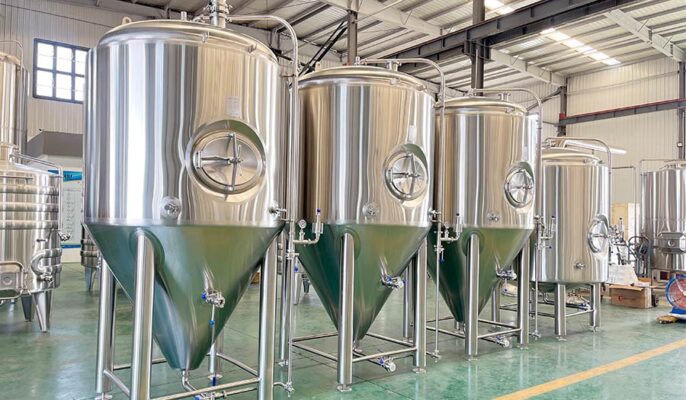
What Is a Dimple Jacket Fermentation Tank?
A dimple jacket fermentation tank features an integrated cooling jacket welded onto the tank wall. This jacket uses glycol or chilled water to control fermentation temperature accurately.
At MICET, all dimple jackets are fully welded, pressure-tested, and passivated to ensure long service life and zero leakage risk.
Typical features include:
- Uniform dimpled cooling jacket
- Excellent heat transfer efficiency
- Precise fermentation temperature control
- Suitable for commercial beer production
Today, dimple jacket tanks are the industry standard for craft breweries, brewpubs, and industrial breweries.
How Do Single Wall and Dimple Jacket Tanks Differ in Temperature Control?
Temperature control is the most significant difference between these two tank types.
Single Wall Gistingstanks
- Rely on room temperature
- Difficult to manage seasonal temperature changes
- Risk temperature swings during active fermentation
Even a 2–3°C fluctuation can negatively affect yeast performance and beer flavor.
Dimple Jacket Fermentation Tanks
- Allow precise temperature control at every fermentation stage
- Support cold fermentation, diacetyl rests, and cold crashing
- Ensure stable yeast activity
“Consistent temperature equals consistent beer.”
This is something every experienced brewer learns early.
For lagers, IPAs, and high-gravity beers, dimple jacket tanks are essential—not optional.
Which Fermentation Tank Is More Energy Efficient?
Energy efficiency is often overlooked, but it directly affects operating costs.
| Functie | Single Wall Tank | Dimple Jacket Tank |
| Cooling method | External / room-based | Integrated glycol jacket |
| Energy usage | High and inefficient | Optimized and controlled |
| Heat loss | Significant | Minimal with insulation |
| Long-term cost | Hoger | Onder |
A dimple jacket tank uses targeted cooling, meaning energy goes exactly where it is needed. In contrast, cooling an entire room for single wall tanks wastes energy.
Over time, most breweries find that dimple jacket tanks pay for themselves through lower energy bills.
Single Wall vs Dimple Jacket: Cost Comparison
At first glance, single wall tanks appear cheaper. However, initial price is only part of the story.
Initial purchase cost
- Single wall tanks: lower upfront cost
- Dimple jacket tanks: higher manufacturing cost due to welding and cooling jackets
Long-term cost factors
- Energieverbruik
- Beer quality losses
- Limited production flexibility
- Future expansion costs
In real-world projects, breweries that start with single wall tanks often replace them within 2–3 years.
My recommendation after hundreds of installations:
Buy once. Buy right.
Which Tank Is Better for Beer Quality and Consistency?
Beer quality depends on yeast health, and yeast health depends on temperature stability.
Single Wall Tank risks
- Overheating during active fermentation
- Inconsistent ester and flavor development
- Batch-to-batch variation
Dimple Jacket Tank advantages
- Stable fermentation temperatures
- Repeatable recipes
- Cleaner, more predictable flavor profiles
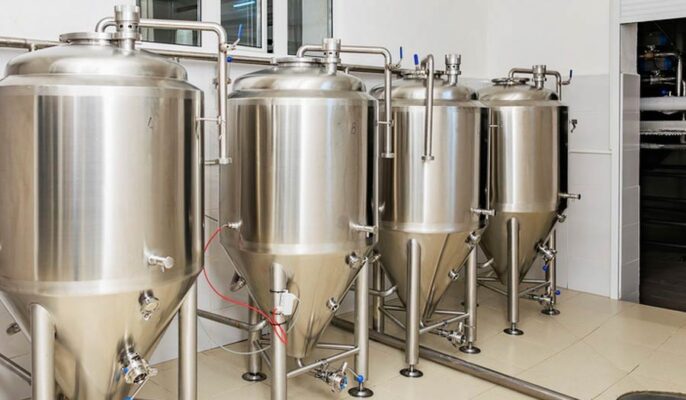
For commercial breweries selling beer to the public, consistency is non-negotiable. This is why professional brewers overwhelmingly choose dimple jacket fermentation tanks.
What Brewery Size Fits Each Tank Type?
Choosing the right tank also depends on brewery scale and long-term goals.
Single Wall Fermentation Tanks are best for:
- Home brewing or R&D
- Pilot systems under 300L
- Educational or experimental setups
Dimple Jacket Fermentation Tanks are ideal for:
- Ambachtelijke brouwerijen
- Brewpubs and restaurants
- Kombucha and cider production
- Medium to large commercial breweries
If you plan to grow, distribute beer, or scale production, starting with dimple jacket tanks is the smarter decision.
Cleaning, Maintenance, and Durability Considerations
Maintenance affects both hygiene and equipment lifespan.
Single Wall Tanks
- Simpler structure
- Manual cleaning often required
- Less suitable for CIP systems
Dimple Jacket Tanks
- Designed for CIP cleaning
- Mirror-polished interior (Ra ≤ 0.4 μm at MICET)
- Fully passivated welds prevent corrosion
With proper care, a high-quality dimple jacket fermentation tank can last 20+ years.
Single Wall or Dimple Jacket: Which One Should You Choose?
Here is a quick decision guide:
- Brewing commercial beer → Dimple Jacket Tank
- Need precise temperature control → Dimple Jacket Tank
- Planning to scale production → Dimple Jacket Tank
- Experimental brewing on a limited budget → Single Wall Tank
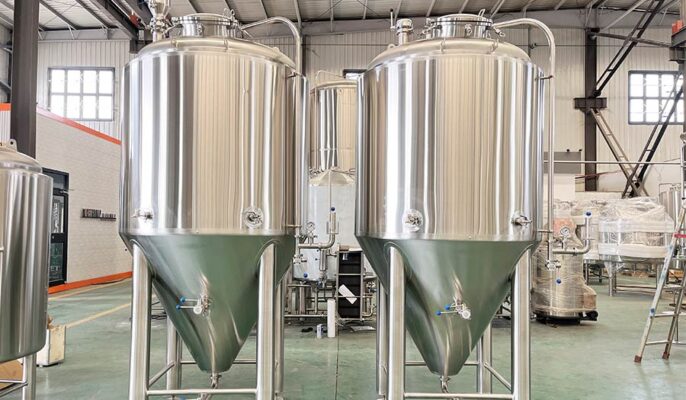
At MICET, we manufacture both types, but more than 90% of professional brewery projects choose dimple jacket fermentation tanks for long-term success.
Our tanks are built with:
- Global brand valves and fittings
- Fully water-welded jackets
- Uniform dimple distribution
- 3-year warranty on tanks
Key Takeaways: Single Wall vs Dimple Jacket Fermentation Tanks
- Single wall tanks are low-cost but limited in control
- Dimple jacket tanks offer precise temperature management
- Better temperature control leads to better beer quality
- Energy efficiency favors dimple jacket designs
- Most commercial breweries should invest in dimple jacket tanks
- Long-term ROI matters more than initial price
If you are serious about brewing high-quality beer consistently, dimple jacket fermentation tanks are the clear winner.
FAQ
What is the main difference between single wall fermentation tanks and dimple jacket fermentation tanks?
The main difference lies in temperature control.
Single wall fermentation tanks do not have built-in cooling systems and rely on ambient room temperature or external cooling methods. Dimple jacket fermentation tanks, on the other hand, are equipped with integrated cooling jackets that use glycol systems to provide precise and stable fermentation temperature control.
Are single wall fermentation tanks suitable for commercial breweries?
Generally, no.
Single wall fermentation tanks are more suitable for pilot brewing, experimental use, or home brewing. For commercial breweries that require consistent quality, batch repeatability, and long-term operational stability, dimple jacket fermentation tanks are the more reliable and professional choice.
Why is fermentation temperature control so important for beer?
Fermentation temperature directly affects yeast activity, flavor development, and fermentation efficiency.
Even a temperature fluctuation of 2–3°C can cause off-flavors, excessive ester production, or incomplete fermentation. Stable temperature control is essential for producing high-quality beer.
Do dimple jacket fermentation tanks consume more energy?
No, in most cases they are actually more energy efficient.
Dimple jacket fermentation tanks use targeted cooling, meaning energy is applied directly to the tank rather than cooling the entire room. This approach typically results in lower long-term energy consumption compared to single wall tanks.
Why do single wall fermentation tanks have lower upfront costs but higher long-term costs?
While single wall fermentation tanks are cheaper to purchase initially, they often lead to higher energy consumption, poorer temperature control, increased beer losses, and limited scalability. Many breweries end up replacing single wall tanks within 2–3 years, making the overall investment more expensive in the long run.
Get turnkey solution Of beer brewing equipment
The engineers of Mice can customize the design according to the requirements of customers for brewing equipment. You can tell us your requirements for the brewery, and we will provide you with a turnkey solution within 24 hours.