


For any brewery founder, the single largest capital expenditure is almost always the equipment. The challenge is that a decision that seems logical and financially prudent at the planning stage can unintentionally create severe operational problems that only surface months or even years later.
This isn’t about minor setbacks. A single poor choice in equipment can create a permanent production bottleneck that caps your growth, dramatically inflate your long-term labor costs, and compromise the batch-to-batch consistency of your beer. In the worst cases, it leads to expensive downtime that damages both your revenue stream and your brand’s reputation.
The solution isn’t about finding the “best” brand, but rather about shifting your approach from a buyer’s mindset to an engineer’s mindset. This guide provides an operational framework to help you identify and mitigate these seven critical risks before you commit your capital.
Mistake #1: Designing for Day One, Not Year Three
Many new breweries purchase a system sized perfectly for their first-year sales forecast. On paper, this looks like the most capital-efficient decision.
The problem arises when your brewery succeeds and demand outpaces that forecast. This positive business outcome quickly becomes an operational crisis. The brewery hits its production ceiling, forcing staff into a constant, inefficient cycle of brewing just to keep up. Revenue growth stalls, not for lack of demand, but for lack of capacity. Expanding at this point is often far more disruptive and expensive than planning for it from the start, especially if you need to upgrade from a nano scale to a full apparatuur voor microbrouwerijen opstelling.
The correct principle is to view your physical plant as a long-term, scalable asset. The initial design must accommodate growth with minimal operational disruption.
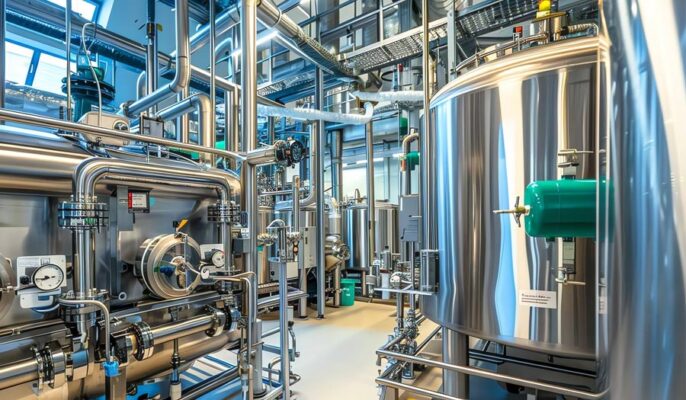
From a systems perspective, this means specifying a modular setup. Your initial floor plan should allocate physical space for future fermentation and brite tanks. In real brewery projects, this often involves running “dark” utility stubs—capped-off glycol, CIP, and electrical lines—to these empty spaces. This simple forethought turns a future expansion from a major construction project into a much simpler, “plug-and-play” installation.
Mistake #2: Underestimating Facility and Utility Integration
It’s common to select equipment based on the listed specifications and assume the building can support it.
The chain reaction of this mistake begins on delivery day. The equipment may not fit through doorways, or the ceiling height may be insufficient for the tanks. You might discover the concrete floor isn’t sloped for proper drainage or can’t support the weight. The existing electrical panel may lack the required 3-phase power for a glycol chiller. Each of these issues triggers expensive, last-minute change orders with contractors, delaying your opening by weeks or months.
A core engineering principle is that the facility’s constraints must dictate the equipment’s final specifications, not the other way around.
The procurement process must begin with a detailed facility audit. Before ordering, create a dimensionally accurate layout showing equipment placement and clearances. Provide this layout to your supplier and require them to provide a utility summary sheet for all connection points. This document becomes the single source of truth for your mechanical, electrical, and plumbing engineers, preventing costly surprises.
Mistake #3: Equating Lower Price with Lower Total Cost
Choosing a supplier based on the lowest quote is a tempting, but often flawed, strategy. The assumption is that all stainless steel tanks are fundamentally the same.
Operationally, that lower price is often achieved through compromises that are invisible at first. Poorly executed internal welds can create crevices that harbor bacteria, leading to inconsistent batches and spoilage. The long-term performance of your cellar depends entirely on the sanitary design and fabrication quality of your roestvrijstalen fermentatietanks. Sub-standard components, like pumps and valves, are prone to premature failure, causing unplanned downtime. The total cost of ownership—when factoring in lost product and repairs—can far exceed the initial savings.
The guiding principle here is that fabrication quality and sanitary design are non-negotiable process parameters. Focus on long-term reliability.
Your technical specifications should be rigorous. Insist on food-grade 304 stainless steel, require smooth, polished interior TIG welds, and ask about the brands used for critical components. A system’s reliability is only as strong as its weakest part, a standard foundational to equipment from experienced international manufacturers, whose confidence is often reflected in comprehensive multi-year warranties.
Mistake #4: Ignoring the Operational Expense of Manual Systems
To minimize the initial investment, many founders opt for a fully manual brewhouse and cellar.
The long-term consequence is that labor becomes the brewery’s primary operational bottleneck. Skilled brewers end up spending most of their time on repetitive tasks like opening valves and monitoring gauges, rather than on process improvement or quality control. This inflates labor costs per barrel and makes your brewery’s quality dangerously dependent on one or two key individuals.
Automation should be viewed as a tool to empower your brewers with better process control, not replace them. The investment should be evaluated based on its ROI in efficiency and consistency.
From an engineering perspective, the highest-impact place to start is temperature control. A PLC-based system for your fermenters is the single most important investment for ensuring batch-to-batch consistency. Similarly, a properly sized Clean-In-Place (CIP) skid, while an upfront cost, dramatically reduces labor hours, chemical usage, and water consumption, offering a clear and rapid return.
Mistake #5: Neglecting to Qualify After-Sales Technical Support
It’s easy to evaluate suppliers based solely on their pre-sales presentation and the equipment itself.
The risk of this approach becomes apparent when something goes wrong. A critical sensor fails on a Friday, halting production. If your supplier is unresponsive, lacks local support, or doesn’t stock spare parts in your region, your brewery could be down for days or even weeks. That downtime is immensely more costly than any initial price difference between suppliers.
The principle is simple: you are choosing a long-term partner, not just a vendor. Their ability to support the equipment is as important as the equipment’s quality.
Your due diligence must include their support infrastructure. Ask about their guaranteed response times, their spare parts availability, and whether they can provide remote diagnostics. A supplier with a robust, accessible service network provides a level of operational insurance that is invaluable.
Mistake #6: Buying Used Equipment Without a Formal Assessment
Purchasing a used system can seem like a smart way to save capital, but it carries significant hidden risks.
The equipment often arrives with issues not visible in photos—microscopic leaks in jackets, pitted interior surfaces that are impossible to sanitize, or faulty wiring in control panels. Without the original design documentation, troubleshooting and repairs become a nightmare. The cost of rectifying these hidden defects can quickly eliminate any initial savings.
Used equipment must be treated as a high-risk industrial asset. The risk must be quantified and mitigated through independent verification voor the purchase.
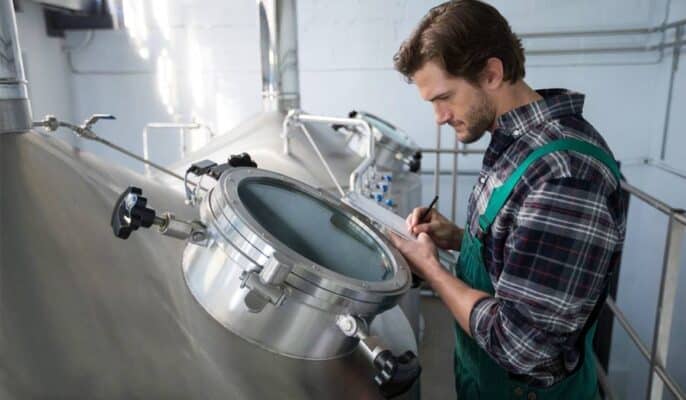
Mandate a formal condition assessment by a qualified, independent engineer. This inspection should include pressure testing of all tanks, dye penetrant testing of critical welds to check for cracks, and a full functional test of all mechanical and electrical components. The cost of this inspection is negligible compared to the potential cost of buying a faulty system.
Mistake #7: Treating Packaging as a Future Problem
Many plans focus entirely on the brewhouse and fermentation, with a vague intention to “figure out packaging later.”
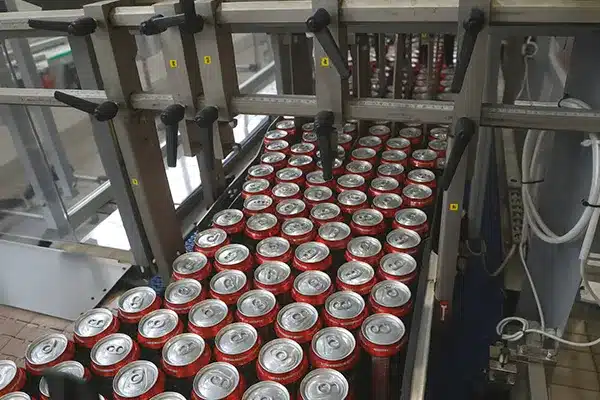
This creates a massive bottleneck at the very end of your production line. You can have tanks full of perfect, finished beer, but no efficient or sanitary way to get it into a saleable format. Your cash flow is crippled because the product cannot leave the building. A last-minute, rushed purchase of packaging equipment often results in a poor choice that doesn’t integrate well with the brewery’s workflow.
A brewery must be planned as a complete manufacturing system. Packaging is not an accessory; it is an integral part of that system and your budget must account for essential brewery filling equipment from the start.
The most effective approach is to plan the entire operation holistically. When discussing a complete turnkey brewing system, the conversation must include the keg washer, canning line, or bottling line as part of the primary project scope to ensure a seamless, end-to-end workflow.
Conclusie
The long-term success of a brewery is built on the thoughtful integration of its systems. A well-considered equipment plan, guided by operational realities and engineering principles, mitigates risk and creates a robust foundation for growth.
Your Next Step
Review your own brewery plan against these seven points. Challenging your assumptions at this stage is the highest-value, lowest-cost insurance you can get for your project. A thorough plan doesn’t just help you buy equipment; it helps you build a resilient business.
Get turnkey solution Of beer brewing equipment
The engineers of Mice can customize the design according to the requirements of customers for brewing equipment. You can tell us your requirements for the brewery, and we will provide you with a turnkey solution within 24 hours.